A man who had drowned was brought into the emergency room. He wasn't breathing.
I was a medical student, standing at the edge of the room, green and without knowledge — I had no idea what to do, so I tried at least to stay out of the way. The doctor on duty didn't raise his voice, but you could feel him rushing. And that made the whole room tenser.
Then the door opened and the head of the emergency department walked in with two assistants. A middle-aged woman. From that moment, everything changed.
She didn't make a single unnecessary movement. She didn't shout, didn't hurry — she moved exactly as much as was needed, and the room fell quiet. A calm order took the place of the scramble. Two minutes later, the patient was breathing again.
I still see it. And I'll admit, I envied her effectiveness: the knowledge, the calm, the experience that came together in her as a single presence.
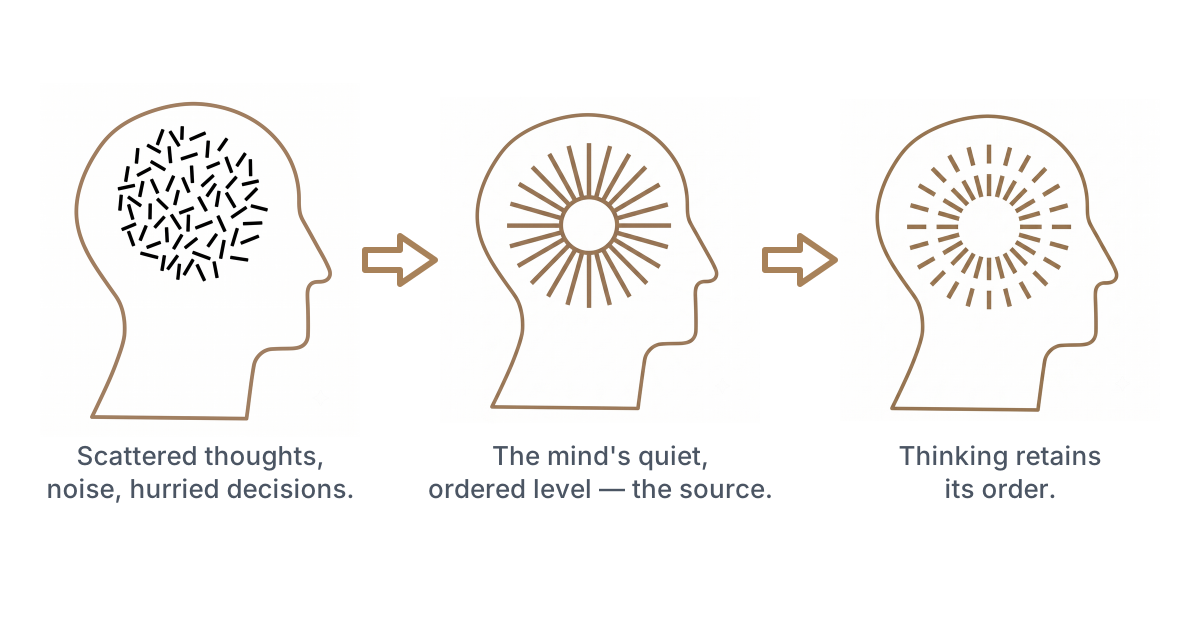
For a long time I thought what saved that man was simply that she knew more than the others. The knowledge and expertise were all needed, of course, but what truly struck me was something else: her calm and her orderliness became a stable point in the room. She didn't add to the chaos; she took it away. The room arranged itself around her.
Years later I came across one of Maharishi Mahesh Yogi's principles of leadership:
A leader must be more orderly than what he leads.
And immediately that woman came to mind. She didn't have to explain it to anyone — I knew exactly what it meant, because I had seen it.
Since then I notice the same thing in more and more places. It isn't the loudest parent who creates order at home, but the calmest. A team doesn't get better because the leader drives it even more tensely — but because there's someone in the room others can arrange themselves around.
Yet our instinct usually whispers the opposite. When there's chaos around us, we tend to do more: more work, more control, more sleepless nights. Sometimes that really is needed. But often the question isn't the amount of action, but what state we act from.
As a TM teacher, this is why meditation interests me — not because it makes difficulties disappear. Meditators have deadlines, sick patients, unexpected crises just like anyone else. But because that kind of calm orderliness, which in that woman looked like the gift of experience, is partly trainable. Someone who experiences a quieter, more orderly inner state day after day will find it a little more available even when things boil over around them.
I don't know who that doctor was, and she probably doesn't remember an anonymous medical student at the edge of the room. But that very day a question arose in me that stayed with me for a long time:
Next time a situation falls apart around me, will I be the one who adds to the tension? Or the one others can arrange themselves around?
Am I more orderly than what I'm trying to bring order to?